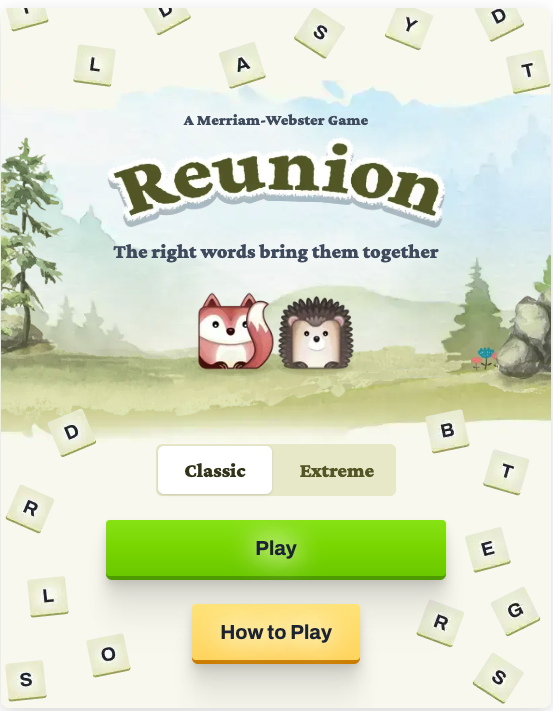
Reunion is a daily word game launched on Merriam-Webster.com in September 2025.
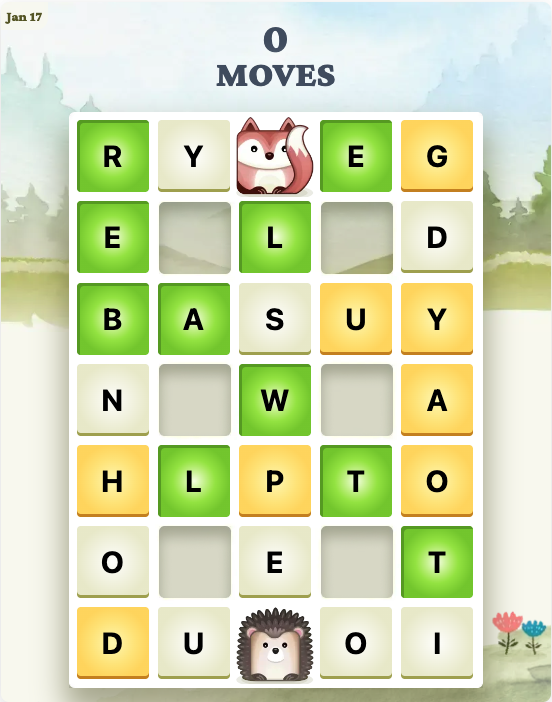
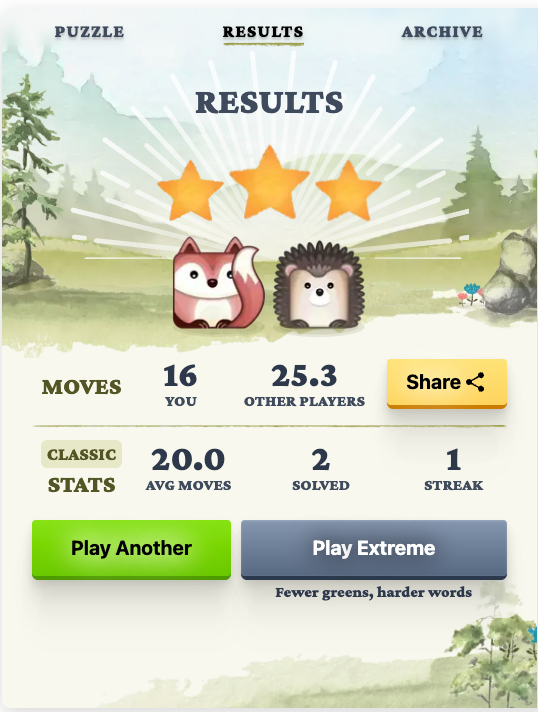
I was contracted to come up with a design for a game similar to Wordle and Waffle, but with a new twist. I identified two key places to improve on Waffle’s design. First, I wanted to give the player unlimited moves. Playing Waffle, I found it unsatisfying that you could run out of moves and fail to solve the puzzle, even if you were just 1 or 2 moves away. Instead, we set up a star system, where you got rewarded for using less moves, but never got cut off from solving the puzzle.
After that, I wanted to add more daily variation to the game. To do this, I came up with the blank tiles, which can be moved around the board, but don’t count as a letter. It was immediately clear in testing that this led to many interesting scenarios, where you have to realize the only valid word requires a blank tile.
I coded the initial prototype in the Turbo game engine, and Merriam-Webster tested internally. Once the game was approved, they added the forest animal theme and launched the game. So far it has been quite successful, leading them to add a second game mode with harder puzzles.
Inspired by rogue-like strategy games, Spelling Bees is a twist on the classic word search format. The first prototype of spelling bees was made in 6 weeks as a solo project in 2014. Several months later, I revisited the project, rewrote the codebase and worked with and artist to create a finished version. Spelling Bees was made in Unity using C#.
Drag across the tiles to spell words to move around the board. Bees block letters and move toward you, so you must be strategic by ending words on the right letters. End long words near the bees to clear them off the board and score points. Higher scores lead to level ups, which gives you super powers. Combine powers to find the perfect build and get a high score in this word game-roguelike hybrid!
Unfortunately the game is currently unavailable due to app store policy changes.
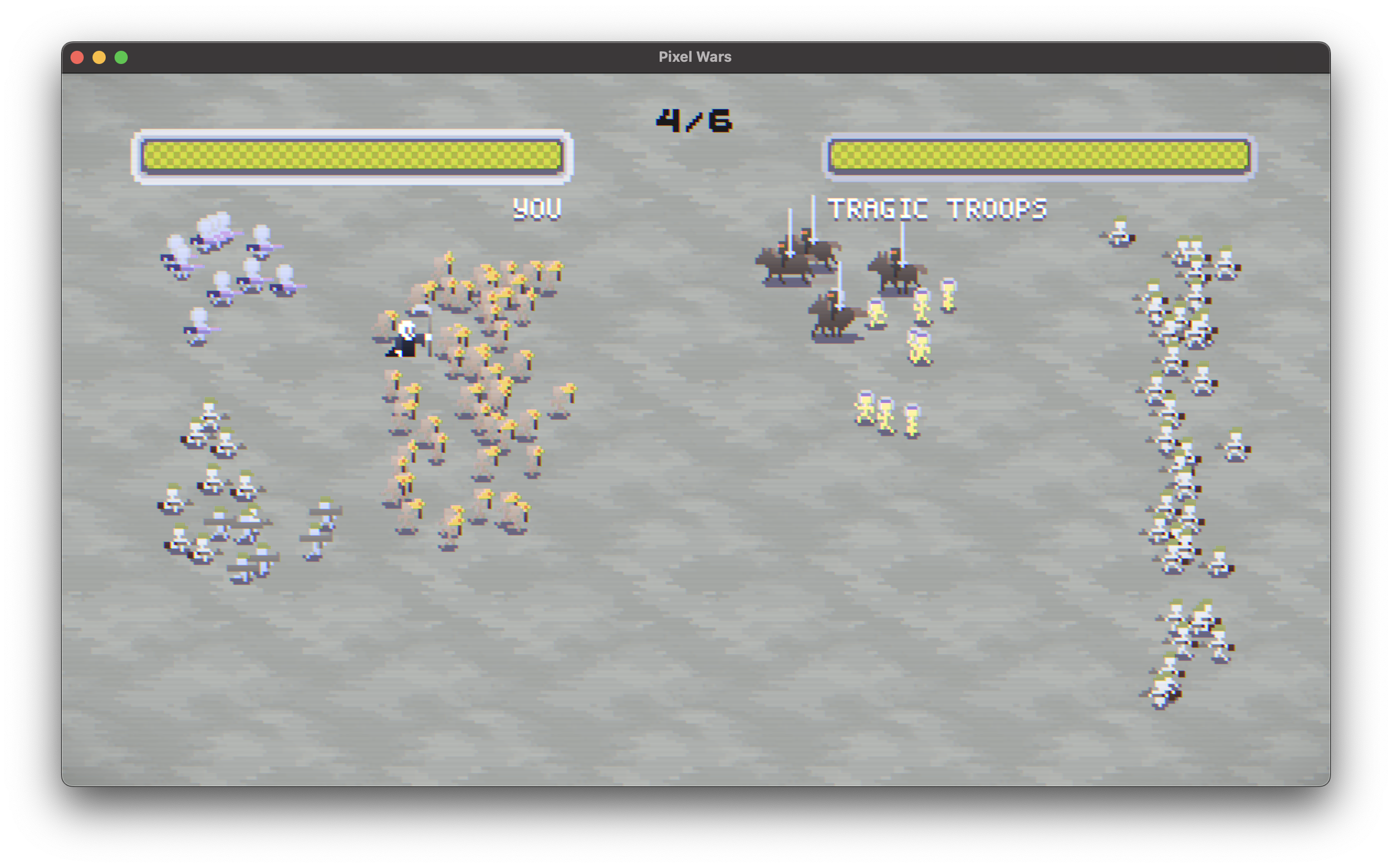
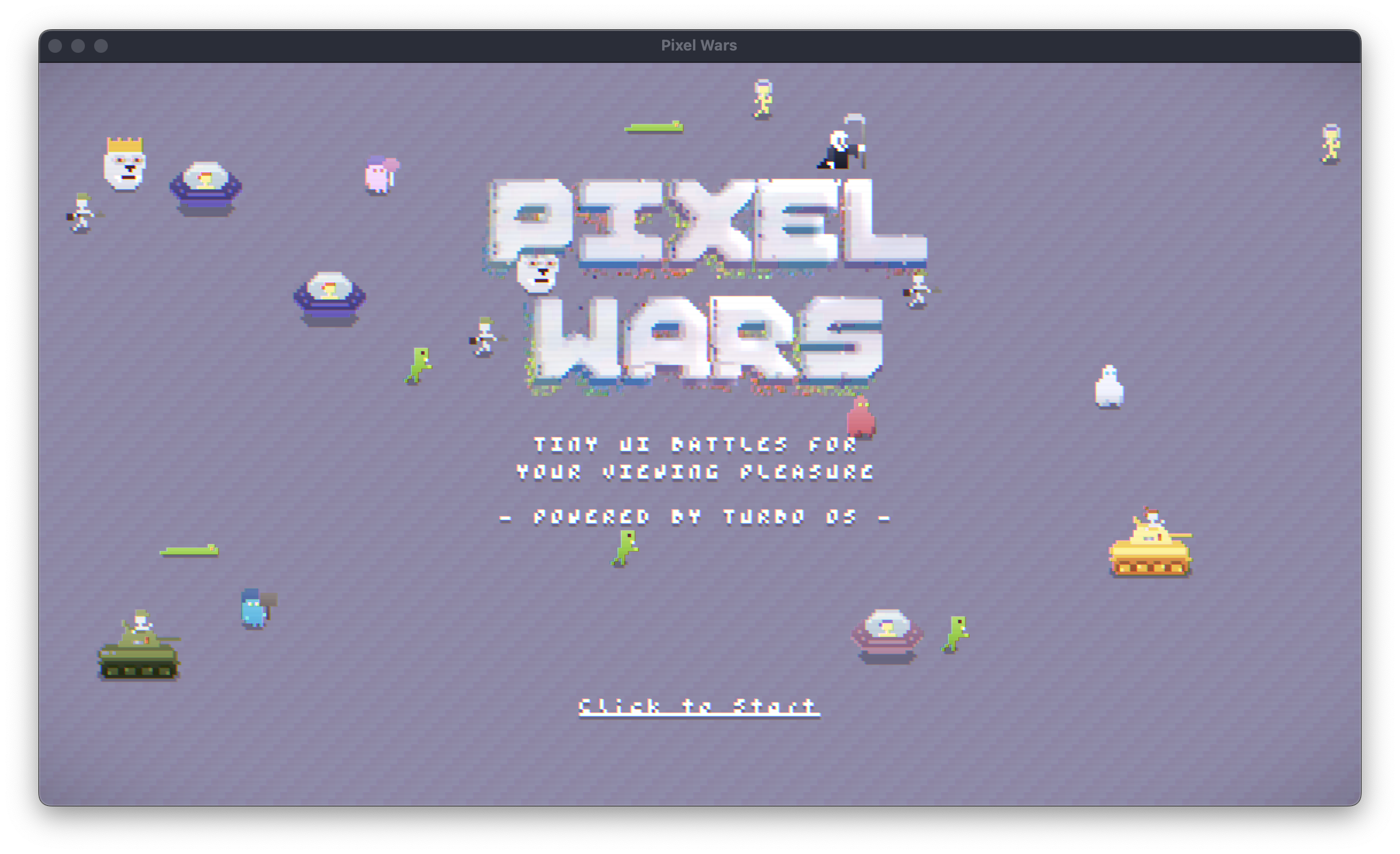
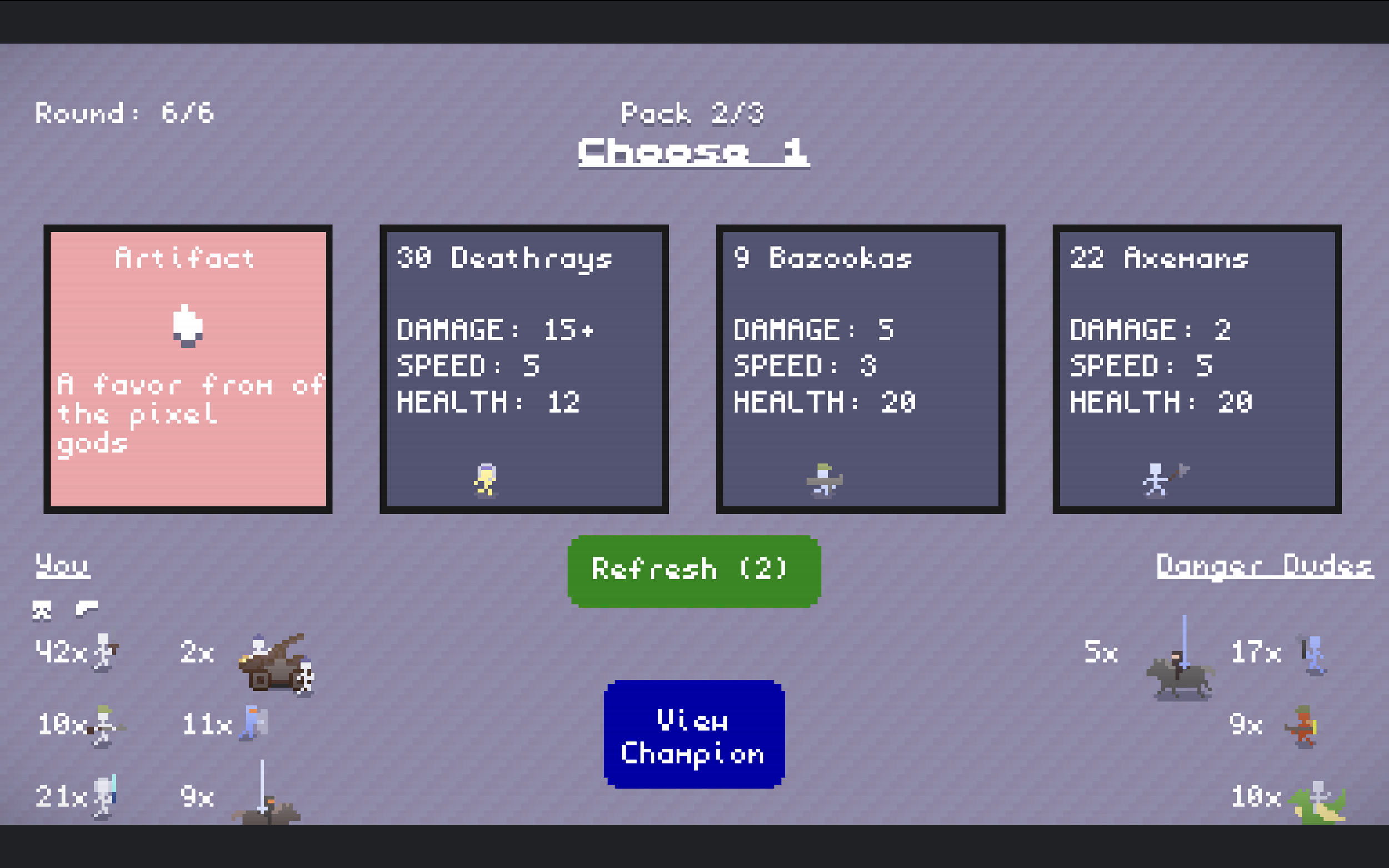
Pixel Warsis a 5 minute army drafting fantasy themed auto-battler. You draft units for your army, then battle against increasingly difficult enemies, but all the units move automatically. You can choose between more units, upgrading your units, or choosing powerful artifacts that change the nature of how your team fights.
If you survive 6 rounds, you get to battle the Arena Champion - the last player’s winning team. Winning teams are stored in the pixel wars database, and everyone can challenge the current king of the hill to try to get their team into the top spot.
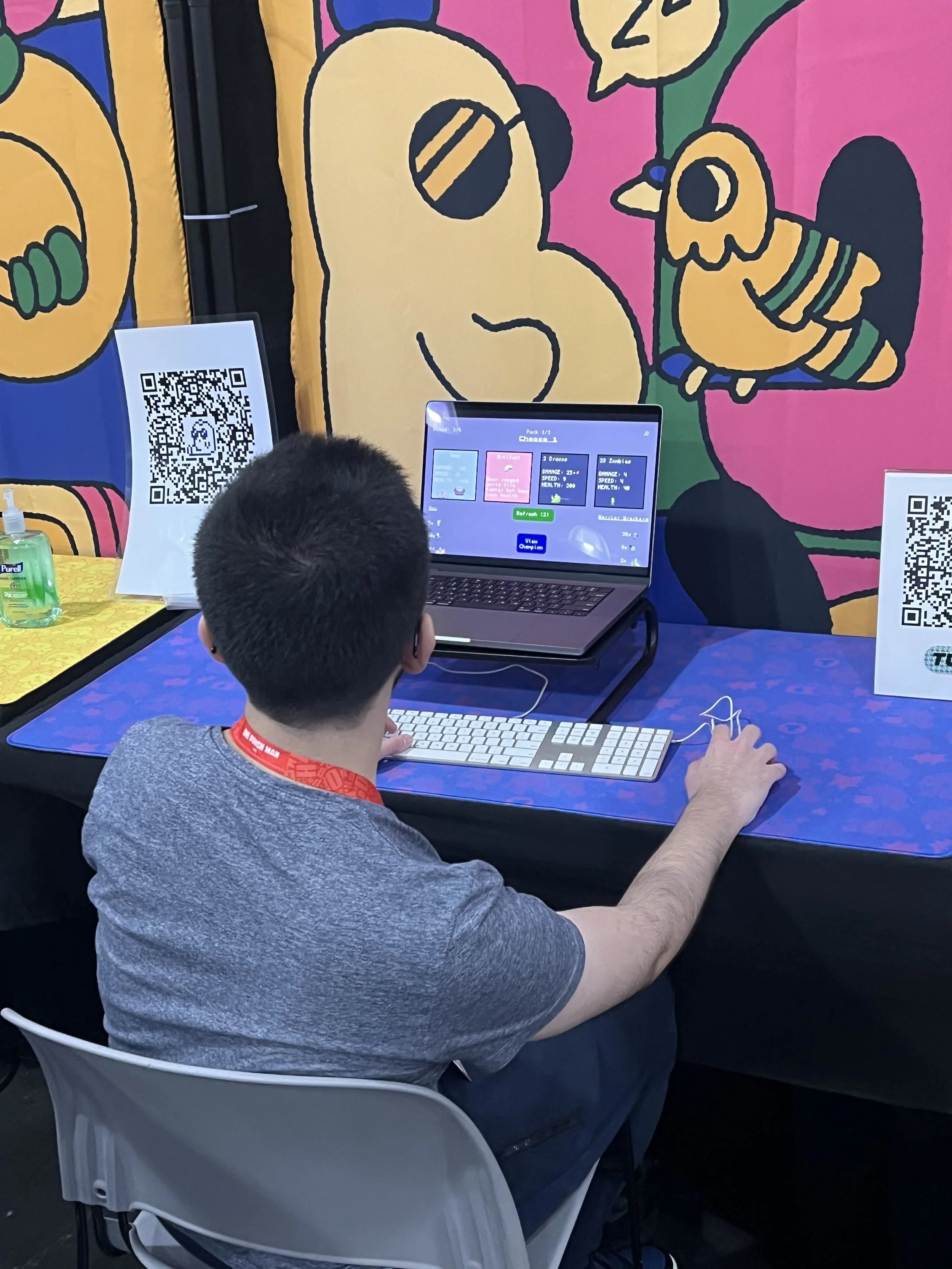
I did all the coding for Pixel Wars in the Turbo Game Engine, and demoed the game at many events in and around NYC to show off Turbo’s capabilities.
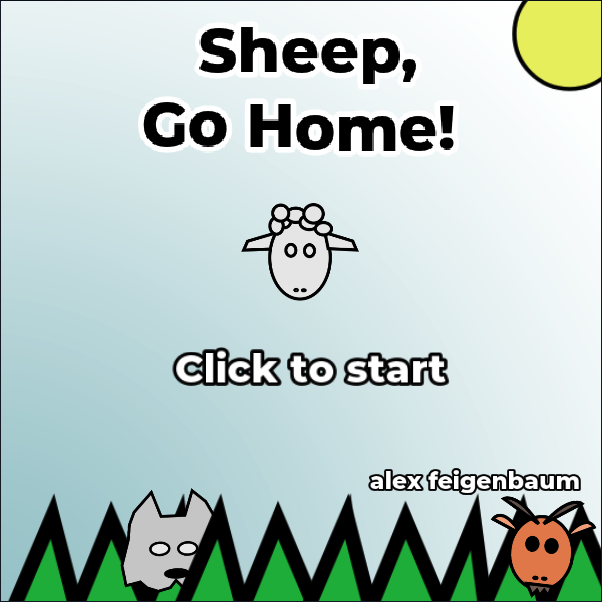
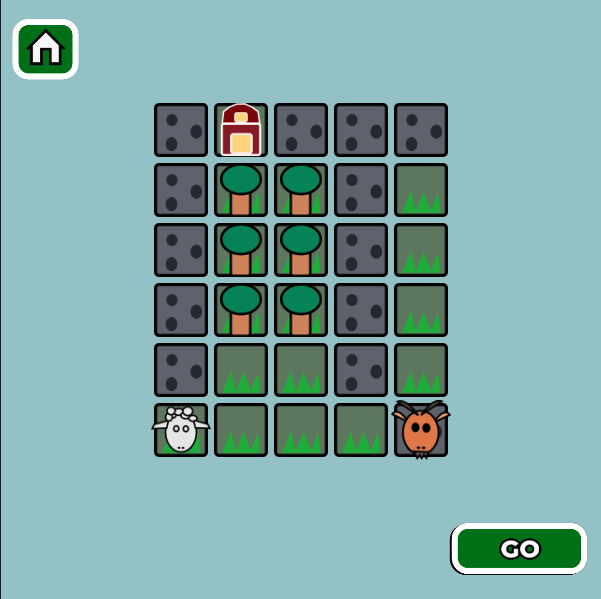
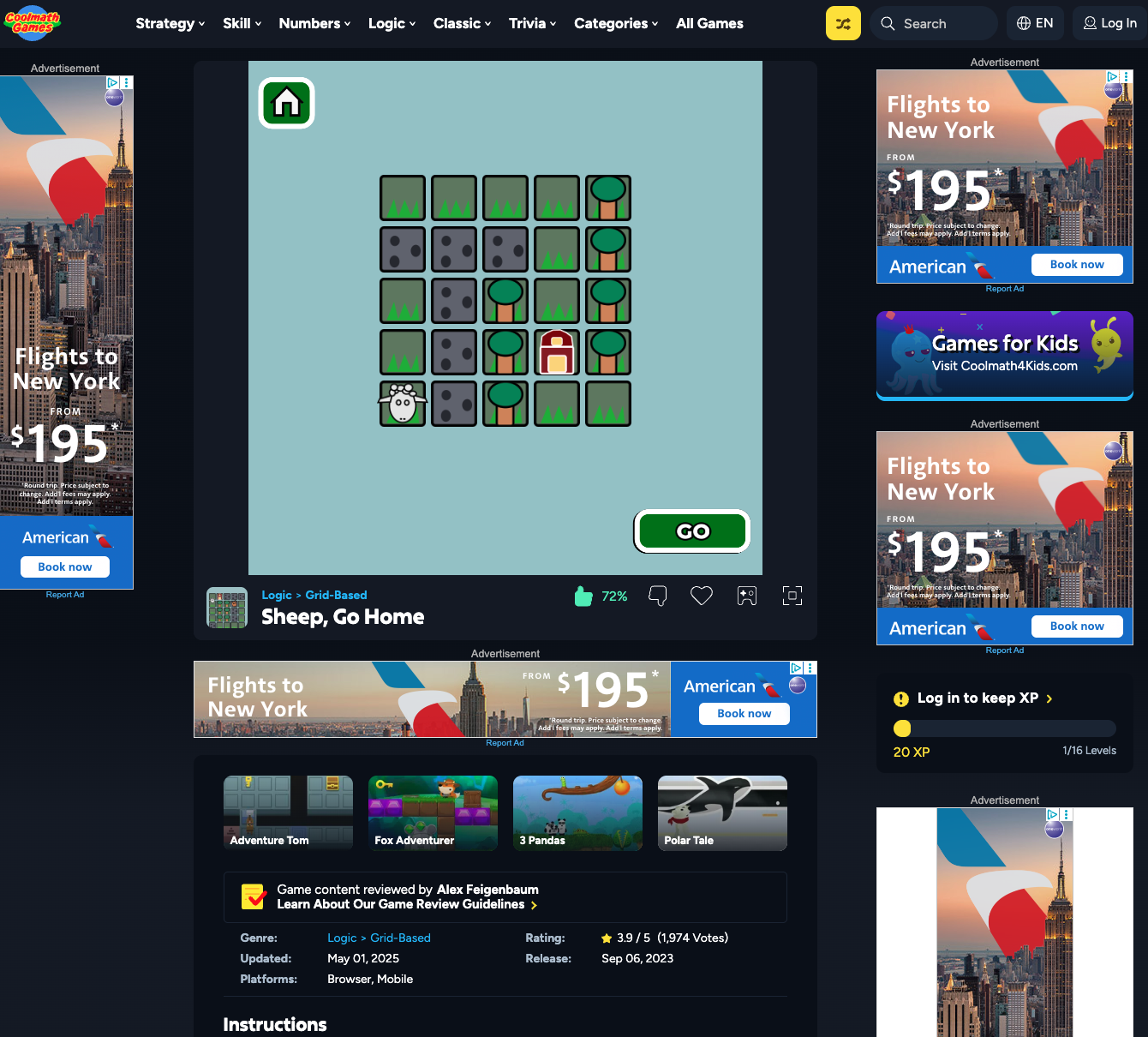
I developed Sheep, Go Home as an experiment to see if I could make a puzzle game feel like an action game. All the animals move automatically, using the A* pathfinding algorithm, but they each have different preferences for which types of terrain they prefer to walk on. You play the game by changing which terrain (grass, rocks, water) are in which spaces on the grid, and trying to get the animals to move in the correct order.
It was launched on CoolmathGames.com in September 2023, and has had over 500,000 game plays and 1500 ratings. It was built in Godot.
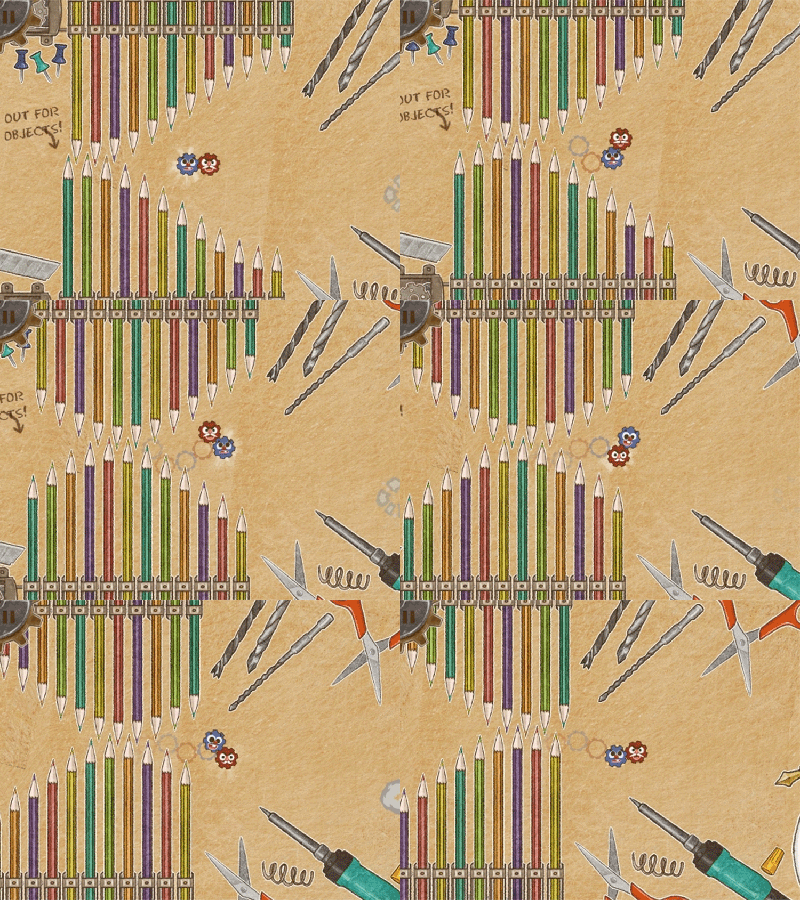
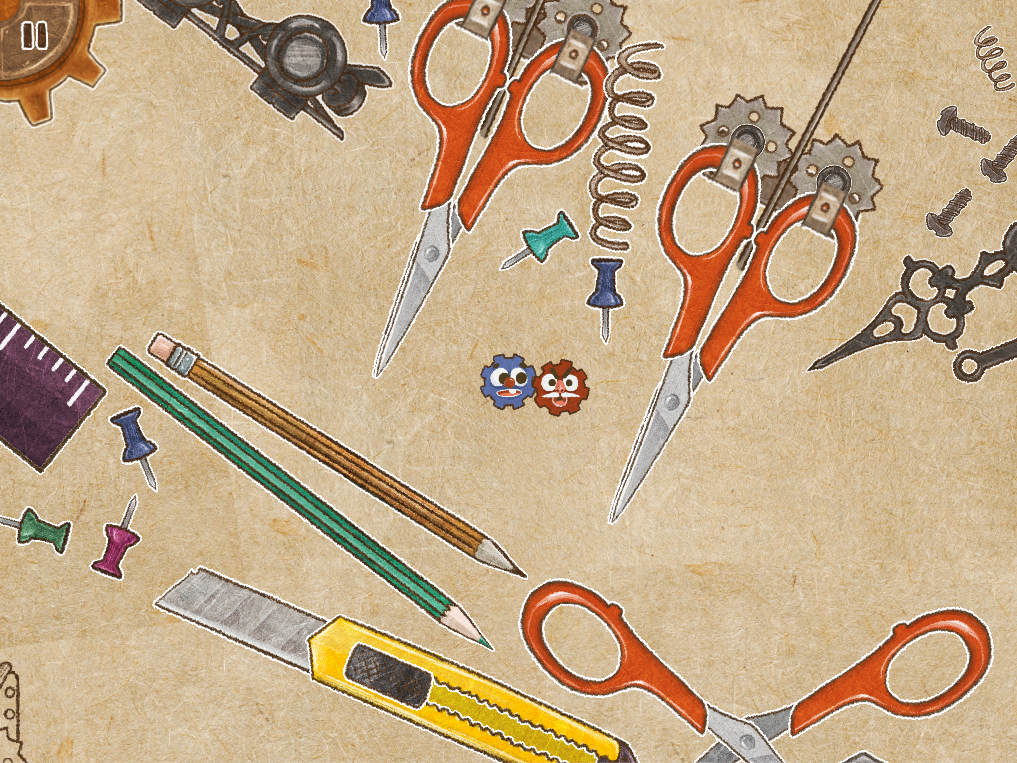
Cognition is a one touch mobile game with an unique movement mechanic where two gears travel together through dangerous mazes. The game uses an intuitive one tap control, providing the enjoyability of high frequency interaction with a more relaxed pace than traditional hyper-casual games.
Cognition began as my NYU Game Center thesis project, in collaboration with four other students. I worked as a game designer and programmer, where I wrote gameplay, UI and animation code, managed weekly code reviews and ran the version control system. I also designed an original plugin to share data between Unity and a companion iOS10 messages app, unlocking new stickers as players collect items in the game.
It was published to the App Store in 2016, sold over 1000 units, but is currently unavailable due to changing app store guidelines.
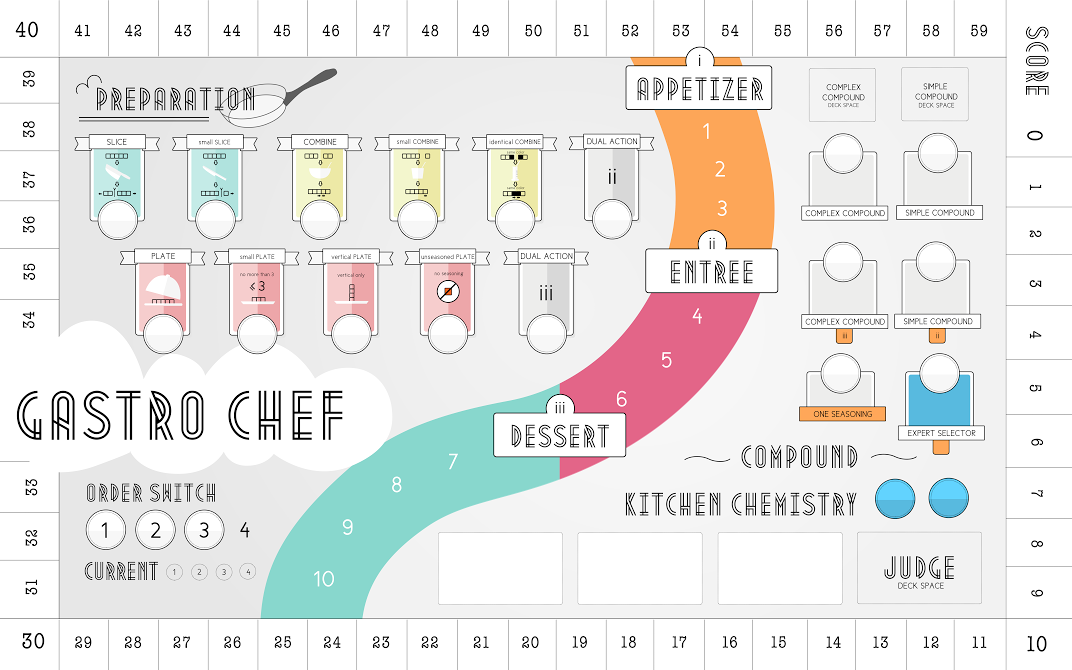
Themed on Iron Chef and molecular gastronomy, Gastro Chef is a worker placement-style board game.
Gastro Chef was designed with a five person team in four weeks as a final project for my first Game Design class at the NYU Game Center. Gastro Chef was selected to show at Indiecade East in February, 2015.
Players scoring by gathering raw ingredients, and then slicing, combining and plating them in the a pre-assigned formation to fill their recipes. Rotating judges with specific food preferences provide variability between games. A "kitchen chemistry" upgrade system allows players to try different strategies.